
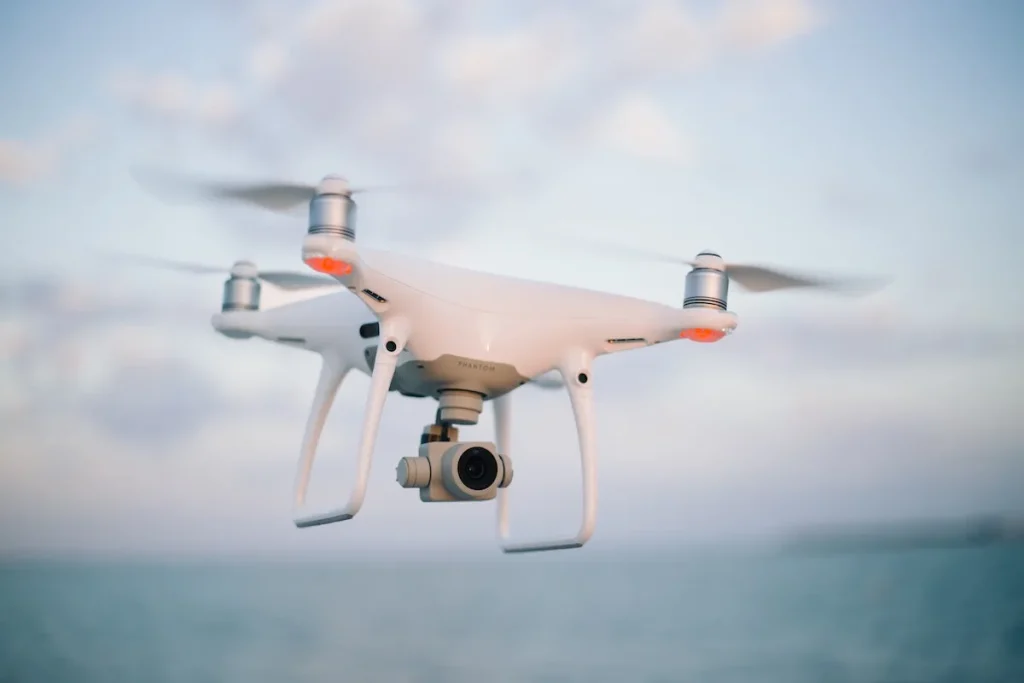
Most Americans do not reject packages arriving by air; they reject surprises over their roof, especially when nobody explained the route first. Drone Delivery Technology is still moving slower than the hardware suggests because U.S. rules ask a harder question than “Can it fly?” Regulators want to know who watches the aircraft, how it avoids a medical helicopter, what happens when a link drops, how neighbors hear it, and who carries legal responsibility when a route crosses busy streets. For U.S. readers tracking emerging logistics systems, that gap explains why test flights look polished while nationwide service still feels limited.
The main brake is not battery life or navigation software. It is permission for repeatable flight beyond the pilot’s direct sight, plus the certification burden tied to carrying goods for pay. FAA drone regulations are slowly moving toward a clearer path, but commercial drone delivery still lives between old aviation logic and new automation. That is why one city may see dinner lowered by tether while another city, with similar rooftops and roads, sees nothing but press releases. The technology may be ready for a route before the rulebook is ready for a market across many states soon.
Why Drone Delivery Technology Gets Trapped Between Promise and Permission
Drone delivery looks simple from a customer’s porch. A small aircraft leaves a store, flies over local streets, lowers a box, and goes home. The harder part sits behind the order button: a company must prove that each flight can share low-altitude airspace with crewed aircraft, birds, trees, wires, weather shifts, school zones, emergency scenes, and neighbors who never asked to join a pilot program. The aircraft may be autonomous, but the permission system around it is deeply human. A flight plan has to survive both a regulator’s desk and a neighbor’s kitchen-table complaint. That is why a route map can be more valuable than a faster motor.
Why BVLOS operations matter more than drone speed
A delivery aircraft that must stay in a person’s eyesight is not a delivery network. It is a demonstration with a short leash. BVLOS operations, meaning flights beyond visual line of sight, change the economics because one trained crew can watch a wider area from a control center instead of standing near every route.
That is the point many casual observers miss. A drone may fly fast, but a service becomes useful only when the ground team can repeat safe routes all day. A grocery drop from a Walmart partner in Texas or a restaurant order in a New Jersey pilot can look ordinary to the customer. Behind it, the operator has carved out approved routes, staffing plans, fallback procedures, and location limits. That hidden labor shapes the price of every drop, because a cheap flight can become costly when it needs extra observers, extra review, or a smaller service area.
The non-obvious part is that the best aircraft may not win first. The company with the clearest safety case often moves faster. Regulators do not reward the prettiest drone. They reward the operator that can explain what the aircraft does when a helicopter appears, a sensor disagrees, or a landing zone fills with kids. In this market, trust is a performance feature.
Why local convenience creates national friction
Aviation law tries to keep the sky consistent across the country. Local life refuses to behave that neatly. A route that works over a low-density Texas suburb may feel wrong over a Boston block with tall trees, narrow yards, and more pedestrian activity. Same aircraft, different risk picture. Even tree cover can change the plan, since a safe hover point in one town may be a poor choice in another.
That makes commercial drone delivery a strange kind of logistics business. It cannot copy the van model, where a driver learns a route and adapts on the fly. A drone route must be designed before the flight, tested against airspace limits, and shaped around what the operator is allowed to do. The sales pitch says “faster delivery.” The operating reality says “approved delivery zone.”
This is why expansion often appears patchy. A company may serve part of Dallas, then a small area near another store, then a campus, then a suburb with friendly zoning. That is not failure. It is the shape of regulation meeting geography. The map grows like stepping stones, not spilled paint. A national brand may run the same app in every state, but the aircraft still has to earn each neighborhood.
The Certification Maze Behind Commercial Drone Routes
Once money changes hands for package carriage, the U.S. treats the operation with aviation seriousness. That shocks people who think of drones as gadgets. The moment a company carries property for compensation, regulators start asking questions that sound closer to air carrier oversight than app delivery. That is why the proposed Part 108 path matters: it aims to move some repeatable low-altitude flights away from one-off approvals and toward a rulebook built for unmanned aircraft. Until that shift settles, operators face a strange middle ground. They must act like mature aviation companies while still proving that the category deserves its own lane.
Why Part 135 feels heavy for small packages
The FAA’s current package delivery framework points operators toward Part 135 certification, along with waivers or exemptions when flights go beyond visual line of sight. That process asks for manuals, training systems, operational controls, safety procedures, and proof that the operator can manage risk over time. The agency’s package delivery by drone guidance makes that path clear.
For a startup, this can feel uneven. A three-pound burrito may trigger paperwork that looks built for aircraft businesses, not neighborhood food runs. Yet the regulator’s view is not about the burrito. It is about the aircraft crossing public space, carrying energy in its batteries, passing near people, and sharing airspace with pilots who may never see it.
FAA drone regulations carry an old lesson from aviation: routine operations deserve more scrutiny than one-off experiments. A single demo can work by luck, extra staff, and perfect weather. A paid network must survive bored Tuesday afternoons, tired supervisors, shifting winds, and small maintenance mistakes. That is where paperwork stops being paper and starts becoming a memory system for the company. It records what people should do when conditions turn ordinary enough to become dangerous. A smooth sunny morning can breed more risk than a dramatic storm warning, because teams relax when the job feels routine.
Remote ID, detect-and-avoid, and the trust problem
Remote ID gives drones a way to broadcast identity and location information. That helps law enforcement, airspace managers, and other parties understand what is flying nearby. For delivery networks, it also raises a softer problem: customers may not want outsiders guessing which house ordered medicine, electronics, or food by watching flight paths.
Safety tools can create privacy tension. That is the counterintuitive trade. The same signal that makes an aircraft more accountable can make a route more observable. Operators will need better route design, customer communication, and data limits if they want trust to last beyond early adopters. A delivery path should tell officials enough to protect the airspace without turning every porch into a public clue.
Detect-and-avoid technology adds another layer. A drone must know when to yield, when to change course, and when to return. That sounds like a sensor problem, but it is also a rule problem. The operator must define what counts as a conflict, who gets priority, and how the aircraft proves it made the safer choice after the fact. The real product is not the sensor. It is the decision record.
Airspace, Neighborhoods, and the Politics of Low Altitude
The sky over your home is not empty space. It carries police helicopters, news aircraft, medical flights, hobby drones, utility inspections, birds, and weather. Drone companies want to add a new layer below traditional aviation, but that layer sits close enough for people to hear, see, and judge. That closeness makes low-altitude policy feel personal in a way airline policy rarely does.
Why low-altitude airspace is crowded in practice
At 200 feet, a route can look clean on a digital map and messy in real life. A delivery aircraft may avoid roads to reduce risk over moving cars, then encounter yards, pools, dogs, trees, or backyard gatherings. It may avoid dense apartment blocks, then lose the delivery density that made the business case attractive.
BVLOS operations depend on reliable command links and airspace awareness, but the bigger test is routine coordination. What happens near a hospital helipad? What if a fire department launches a drone near a structure fire? What if two delivery operators serve the same neighborhood from different stores? These are not rare edge cases once flights become common.
The FAA has been exploring traffic management services for unmanned aircraft because overlapping routes create drone-to-drone risk. That matters more than a single aircraft’s talent. A brilliant drone flying alone is one thing. Fifty aircraft from five companies, all chasing lunch orders before a storm, create a different kind of sky. The hard part is not drawing lanes. It is keeping those lanes useful when real life interrupts them. A route that works at 10 a.m. may need a different answer when school lets out, a rescue helicopter launches, or a summer thunderstorm starts building over the next town.
Noise, yards, and the neighbor who never ordered
Public acceptance can collapse over small irritations. A delivery drone may sound harmless during a demo, but repetition changes the reaction. The first flight feels novel. The tenth flight during a backyard birthday feels like someone else’s convenience landing on your afternoon.
Noise reviews often focus on levels, but pattern may matter more. A short buzz at the same time every evening can annoy people faster than a louder event that happens once. That is why route spacing, approach angles, drop methods, and operating hours matter. A tethered drop can avoid landing in a yard, but it can still make the aircraft hover long enough for everyone nearby to notice.
Local leaders also face an awkward political question. The customer gets the benefit, while neighbors share part of the burden. If a town sees aerial delivery as a service for a few households and noise for everyone else, support fades. Companies that treat community feedback as a launch task, rather than a long-term operating duty, will learn that silence at a hearing does not equal consent. People may tolerate a new service faster when they can see how complaints lead to route changes. The smartest operators will not treat noise as a public relations issue alone. They will treat it like uptime, battery health, or navigation accuracy: a field measurement that guides daily decisions.
How Operators Can Move Faster Without Fighting the Rules
The companies most likely to grow are not waiting for a perfect national switch. They are building smaller proof points that regulators, cities, retailers, and residents can understand. That means boring routes, clear limits, honest noise data, and service areas chosen for safety instead of hype. The irony is sharp: the less dramatic the early service feels, the easier it may be to expand. A dull launch can be a sign that the operator picked the right problem: repeatable service over spectacle.
Start with routes that make the safety case obvious
Medical campuses, planned suburbs, business parks, and store-to-neighborhood corridors can make better early markets than dense downtowns. They offer cleaner landing zones, fewer obstacles, and easier public education. A pharmacy delivery route for urgent but lightweight items may also carry a stronger public-interest story than a novelty snack run.
Commercial drone delivery gains credibility when the use case feels worth the aircraft overhead. A prescription, a forgotten school item, or a small grocery order during bad traffic can make sense. A single fountain drink flying over six homes may not. The public does not judge automation in a vacuum. People compare the benefit they see with the nuisance they feel.
This is where last-mile delivery planning needs a different mindset. The fastest route is not always the best route. The best route may be the one that avoids the angriest street, the busiest playground, or the corner where emergency helicopters often pass. Slower on paper can mean faster approval. A company that starts with a cleaner route may reach more homes sooner than a rival that fights for the flashiest launch zone.
Build public trust before chasing national coverage
Some operators talk as if regulation is the enemy. That is a weak strategy. The better move is to make regulators comfortable by showing discipline before scale. Publish plain-language service limits. Explain where flights happen. Share how complaints change routes. Give city officials answers before residents fill the gap with fear.
There is a business reason for this, not only a civic one. Trust lowers expansion cost. When a company enters a new market with a record of safe flights, clean communication, and fair complaint handling, it starts the next conversation from a better place. When it arrives with vague promises, every meeting becomes a trial. FAA drone regulations may set the floor, but public comfort often sets the ceiling.
The broader lesson for commercial automation trends is simple: permission is part of the product. A drone network is not only aircraft, apps, batteries, and depots. It is also a social contract with people below the flight path. The companies that understand that will move slower at first, then with less resistance later. They will build delivery routes like civic infrastructure, not stage props. That shift changes how teams hire, how they train, and how they talk to city halls. It also separates serious operators from companies that mistake a clean demo video for a business.
Conclusion
The next few years will decide whether aerial package services become a normal U.S. convenience or remain a set of impressive local pilots. The winner will not be the company that shouts loudest about autonomy. The next stage of Drone Delivery Technology will belong to operators that treat regulation, airspace design, privacy, and neighborhood trust as core engineering problems.
That may sound less exciting than instant delivery from the sky, but it is the only path that lasts. Americans will accept drones when flights feel predictable, useful, and respectful of the places they pass over. Companies that build for that reality can still grow. They will need patience, cleaner safety cases, and a habit of listening before launch day. The sky is available, but it is not empty. A delivery route should feel boring to the people below it, and that takes restraint before reach. That habit will matter more as flights move from novelty to daily background. Earn the route before asking people to live under it.
Frequently Asked Questions
What is the biggest regulatory hurdle for drone package delivery in the United States?
Routine flight beyond the pilot’s direct sight remains the main hurdle. Operators often need Part 135 certification plus waivers or exemptions for broader routes. That slows expansion because each service area must prove safety, control, and airspace awareness before regular paid delivery can grow.
Why do drone companies need BVLOS approval for normal delivery routes?
Most useful routes extend beyond a pilot standing near the launch point. BVLOS approval allows aircraft to fly farther while trained crews monitor them through systems and procedures. Without it, delivery zones stay small, expensive to staff, and closer to demos than daily logistics.
Are FAA drone regulations stopping delivery drones from launching everywhere?
They are slowing broad rollout, not stopping every launch. Approved operators can serve limited areas under defined conditions. The challenge is turning those approvals into repeatable, larger networks without creating new risks for crewed aircraft, people on the ground, or local communities.
Is commercial drone delivery safe for neighborhoods?
It can be safe when routes, aircraft, oversight, and landing methods match the area. Safety depends less on the drone alone and more on the whole operating plan. A quiet suburb, a clear drop zone, and strong monitoring create a better risk profile than dense streets.
Why do some cities get drone delivery while others do not?
Operators choose areas where airspace, local layout, store locations, population density, and approval conditions work together. A city with many obstacles, airport conflicts, or public concerns may need more planning. Expansion follows regulatory fit as much as customer demand.
How does Remote ID affect drone delivery privacy?
Remote ID helps identify aircraft in the sky, which supports accountability. It can also expose patterns if someone watches routes closely. Delivery companies need privacy-aware routing, careful data practices, and clear customer communication so safety tracking does not become household surveillance.
Will Part 108 make drone delivery common in the United States?
It could create a clearer path for repeatable BVLOS flights, but final rules and implementation details matter. Operators will still need approved aircraft, trained teams, traffic coordination, and local acceptance. A better rule can speed growth, yet it will not remove every barrier.
What kinds of packages make the most sense for drone delivery?
Small, time-sensitive, lightweight items fit best. Prescriptions, convenience groceries, documents, lab samples, and prepared food can make sense when roads are slow or distance is short. Heavy, low-value, or bulky items still favor vans because drones face weight, range, and drop-zone limits.